
/ PRESENTATION

NIELS SHOE MEULMAN
STEFANO PANE MONFELI
MICK LA ROCK
ANTIGOON
ZEDZ
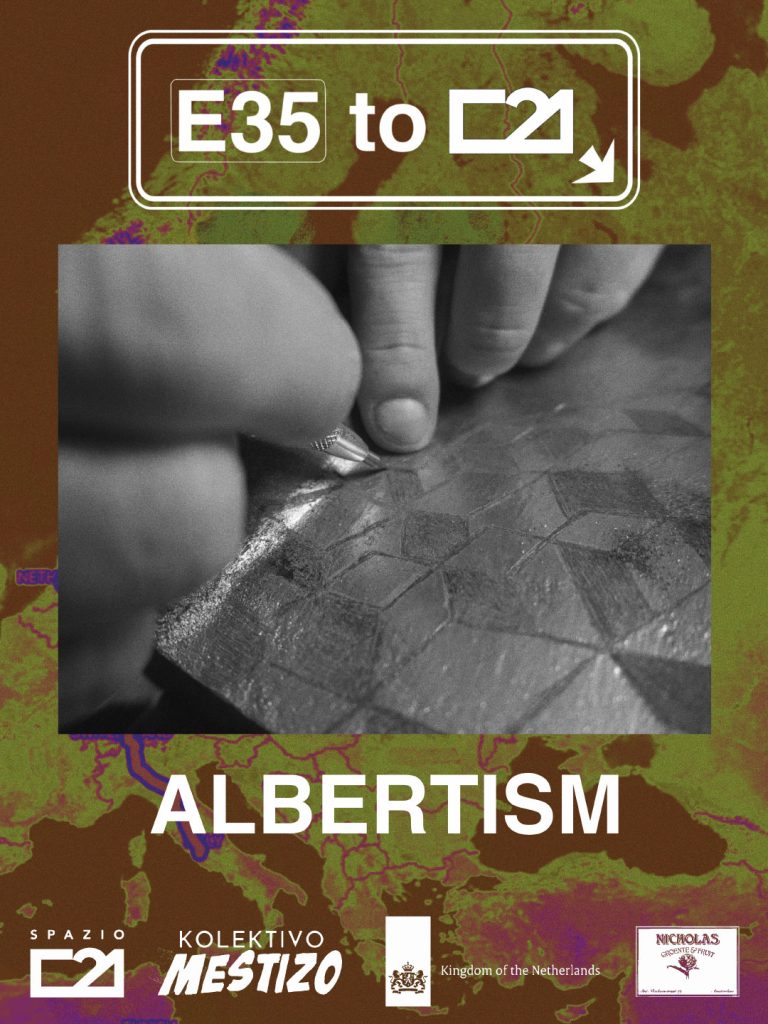
ALBERTISM
SEPTEMBER 2026
NOVEMBER 2026

E35 to C21
NIELS SHOE MEULMAN
STEFANO PANE MONFELI
MICK LA ROCK
ANTIGOON
ZEDZ
ALBERTISM
Critical text by Chinny Bond
Graffiti arrived in Europe during the 1980s and quickly developed distinct local identities. While cities in the Netherlands became important centres for experimentation in writing, style, and urban intervention, Reggio Emilia and the wider landscape of Northern Italy cultivated their own generations of writers, transforming walls, railways, and industrial landscapes into sites of creative exchange. Although separated by geography, these scenes shared a common spirit: a culture built on movement, invention, and the desire to leave a mark on the city.
E35 to C21 traces the evolution of this culture beyond its original context. Bringing together artists from the Netherlands and Italy, the exhibition explores how graffiti has developed into a diverse field of contemporary artistic practices.
The works on view demonstrate that the transition from street to studio is not a departure from graffiti’s principles but an extension of them. Letters become structures, gestures become paintings, and the urban environment becomes material for new forms of artistic inquiry.
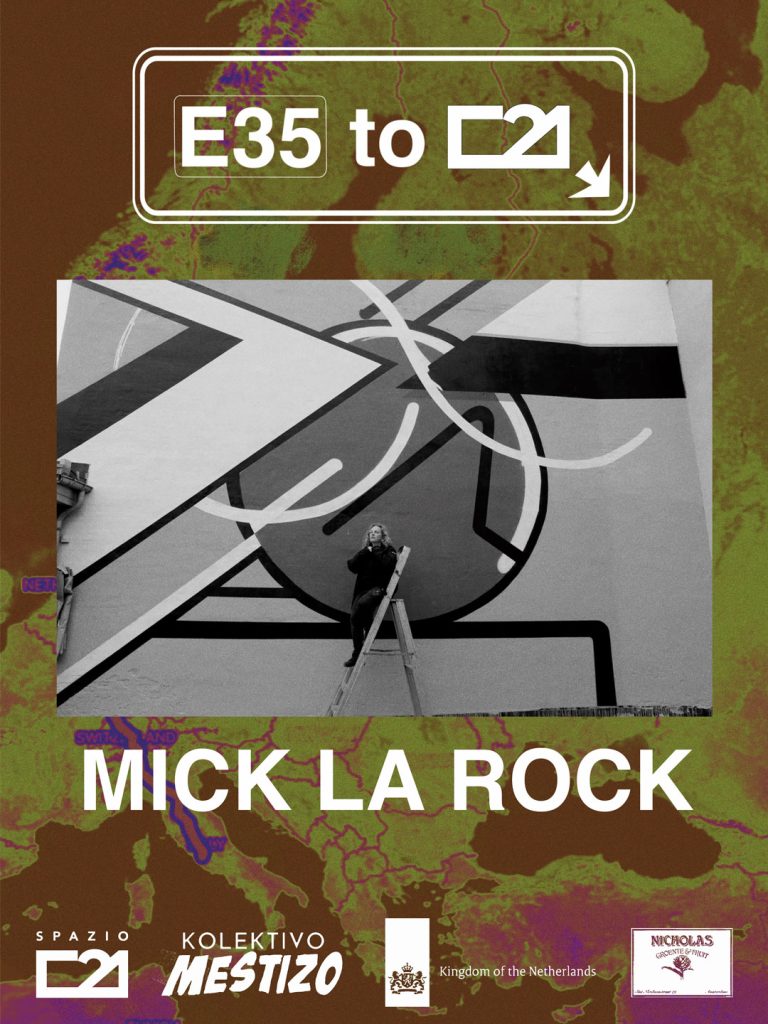
Among the pioneers of this evolution is Mick La Rock, one of the first female graffiti writers to gain recognition within the Dutch scene. Her practice translates the experience of the city into a sophisticated visual language informed by Brutalist architecture, modernist design, and spatial memory. The energy once invested in writing is transformed into precise geometric compositions that investigate rhythm, balance, and the built environment.
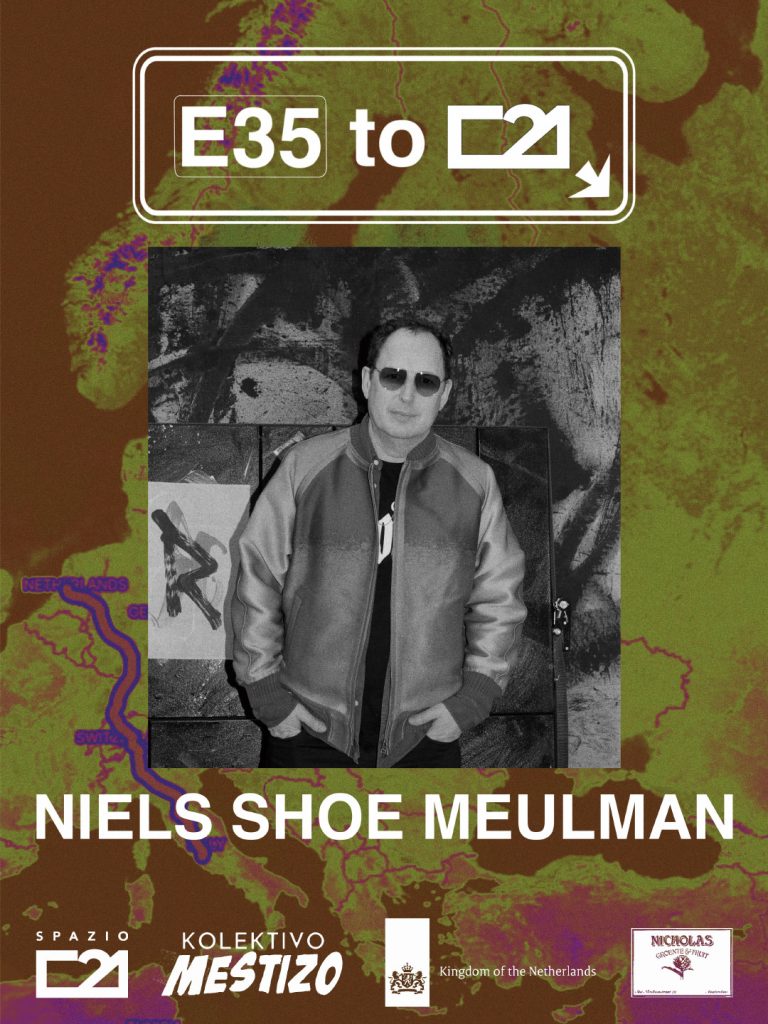
The relationship between writing and painting is central to the work of Niels Shoe Meulman, internationally recognised for developing Calligraffiti, a fusion of traditional calligraphy and graffiti culture. His recent works move further towards abstraction, using unconventional tools such as oversized brushes and brooms to create gestural compositions in which traces of language remain visible. The act of mark-making becomes the subject itself.
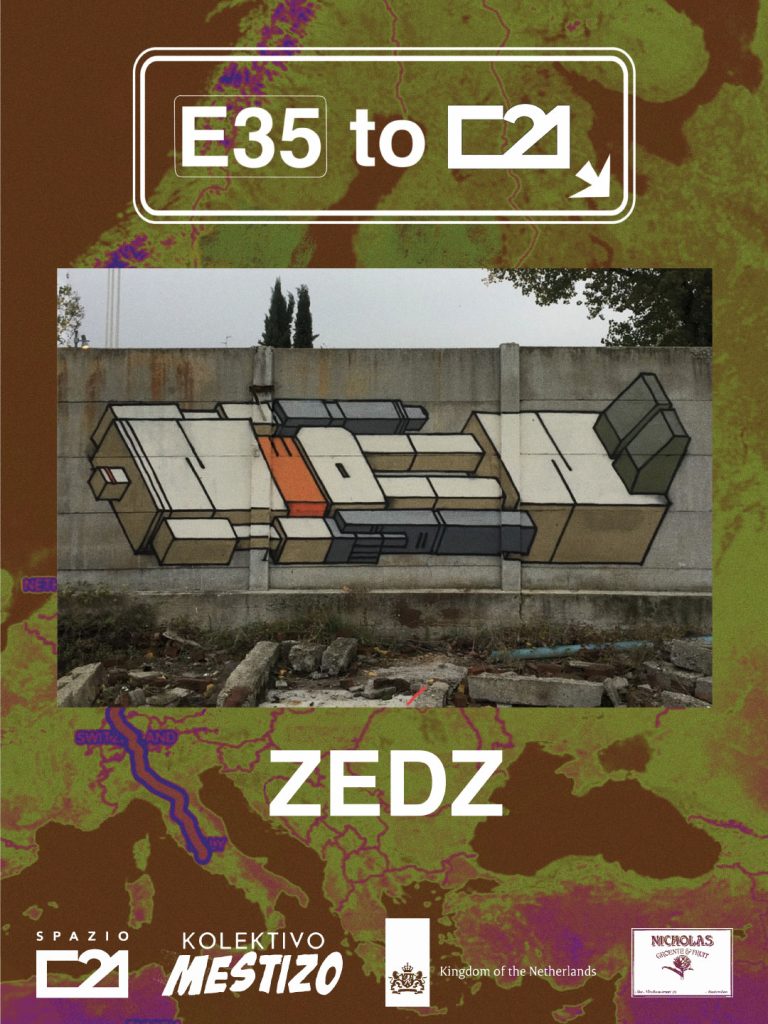
This movement from lettering toward abstraction also characterises the practice of ZEDZ, one of the most influential artists to emerge from the Dutch graffiti movement. Expanding beyond traditional graffiti, he constructs complex visual systems inspired by architecture, design, and urban dynamics. His works reveal how the logic of writing can evolve into a broader exploration of space, structure, and form.
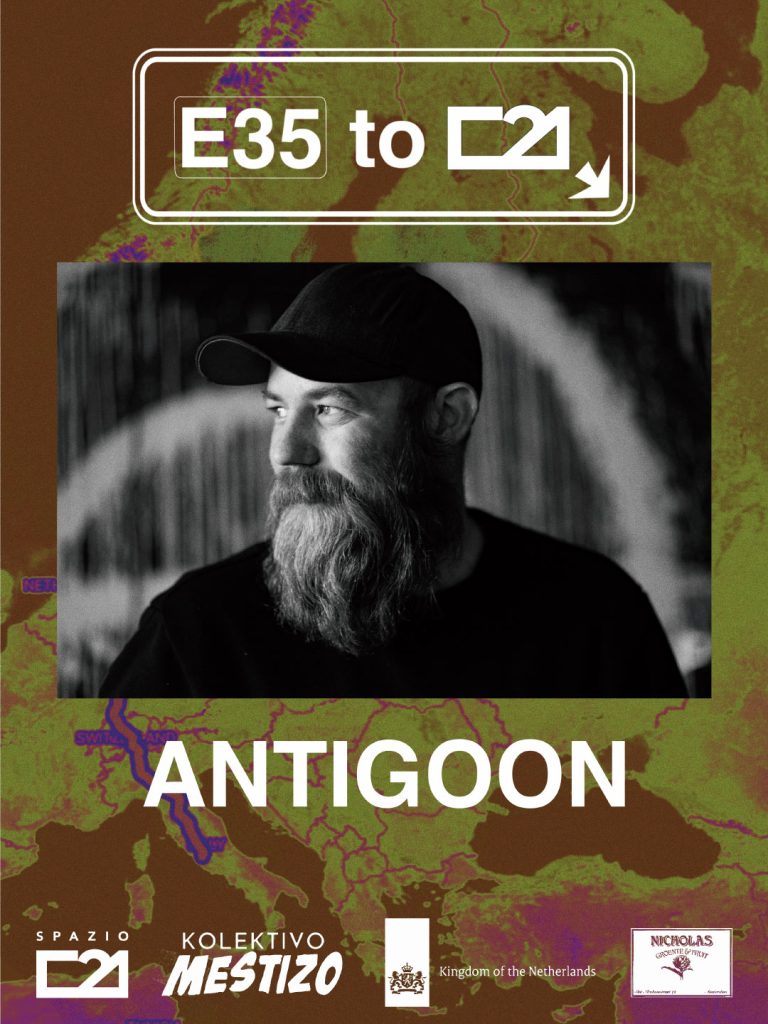
For Antigoon, the legacy of graffiti is explored through technology. Known for building machines that draw and paint using spray cans and markers, he reimagines the gestures of writing through systems of automation and experimentation.
His works occupy a space between human intention and mechanical process, questioning how marks are produced and how authorship is constructed.
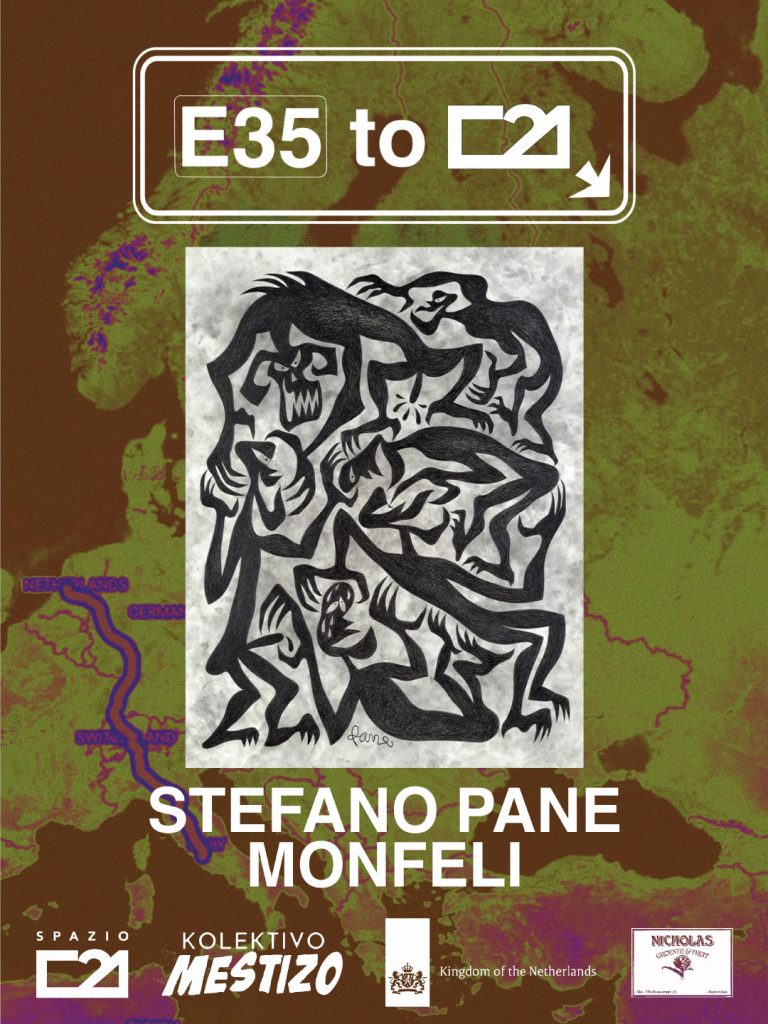
Few artists embody the dialogue between Italy and the Netherlands more directly than Stefano Pane Monfeli. Emerging from Rome’s pioneering graffiti scene during the 1990s, Pane was not only an active writer but also among the first figures to document and critically reflect upon the movement, authoring “Just Push The Button”, a landmark publication on the history of Roman graffiti. After relocating to Amsterdam in 2004, his work expanded into a multidisciplinary practice encompassing painting, illustration, graphic design, installation, and publishing.
Throughout this evolution, traces of graffiti remain present not as literal lettering but as a method of constructing images. Drawing from modernism, comics, design, and urban culture, Pane transforms the structural logic of writing into playful yet sophisticated compositions where signs, forms, and narratives coexist.
In his work, graffiti becomes a framework for thinking rather than a stylistic category, continuously questioning how images communicate and generate meaning.
Albertism expands post-graffiti practice through a deep engagement with materiality and transformation. Writer, engraver, painter, and sculptor, he works with terracotta, recycled metals, railway remnants, and industrial waste, employing oxidation processes and engraved paint surfaces to create works that carry the physical memory of urban environments.
Emerging from graffiti culture but moving beyond its conventional formats, his practice investigates the traces left by movement, time, and industry.
Through sculpture, painting, and public murals, he transforms discarded materials into poetic records of the spaces from which they originate.
Together, these artists demonstrate that graffiti is far more than a visual language associated with the street. It is a way of thinking, rooted in experimentation, adaptation, and the constant redefinition of boundaries.
Connecting Reggio Emilia and the Netherlands, E35 to C21 presents postgraffiti not as a single aesthetic, but as a field of evolving practices that continue to generate new possibilities for contemporary art.
This exhibition has been realized through the collaborative efforts of SPAZIOC21, Kolektivo Mestizo, Nicholas Groente and Fruit and Chinny Bond, with the support of the Embassy of the Kingdom of the Netherlands and the Consulate General of the Kingdom of the Netherlands.
Their shared commitment to cultural exchange has made possible this encounter between Dutch and Italian artistic trajectories, highlighting the continuing evolution of graffiti as a global contemporary practice.
NIELS SHOE MEULMAN
STEFANO PANE MONFELI
MICK LA ROCK
ANTIGOON
ZEDZ
ALBERTISM
SEPTEMBER 2026
NOVEMBER 2026